Lots of volley balls for club


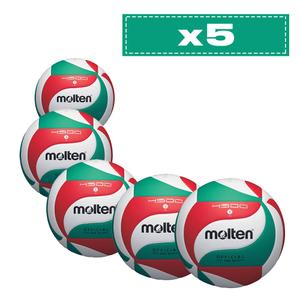
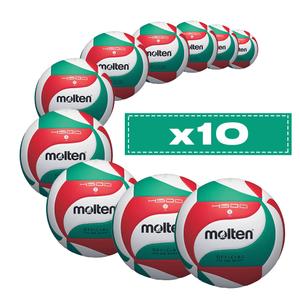
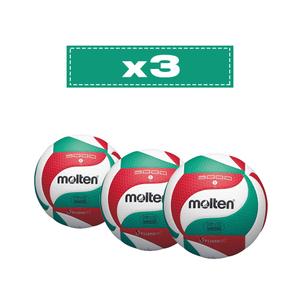
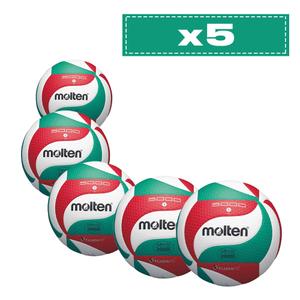
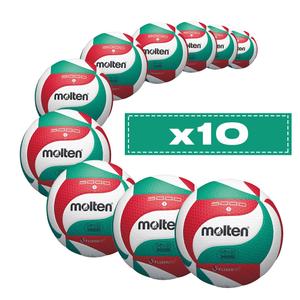


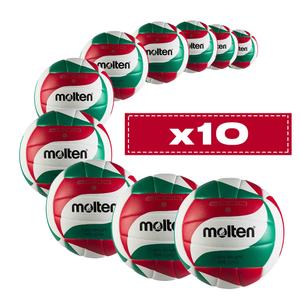


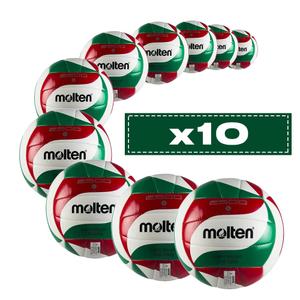


An attack-defense session is a cart full of balls that gets emptied in a few minutes: to work without chasing after every ball, a club buys its batches of volley balls in groups of three, five, or ten of the same model.
Hall or sand, match or session: the use is decided before the number.
Why buy the same ball in bulk
The same model for an entire category means the same weight, feel and trajectory from one exercise to another. Setters adjust their technique faster, and receivers learn to read a ball that remains the same. Buying in bulk also simplifies club management: a lost ball can be replaced with the same one, and the stock stays consistent from one season to the next.
Three, five or ten balls: which set for which team
A set of three serves as a match base or a supplement for a small team. The set of five equips a youth session or a recreational group. The set of ten fills a trolley for serving, receiving or attacking drills, where every player should have a ball in hand. Many clubs combine a small set of match balls with a larger set of training balls.
Match or training balls: assigning roles
Competition balls are reserved for matches and sessions close to the match, to avoid wearing them out too quickly. Training balls endure series of smashes against the wall and repeated drills. Keeping the two types separate, for example in two bags, extends the life of match balls. Product names clearly indicate this on this page: competition on one side, training on the other.
Sets for sand
Beach-volley is played with a special ball, softer and designed for outdoor play. The sets of Wilson OPTX AVP neon yellow, the ball used in the American professional circuit, and Mikasa BV551C Beach Classic equip a club that opens a beach section or a school that organizes a sand tournament.
Molten, Mikasa, Wilson: the most requested sets
Molten offers its V5M5000 sets, a competition ball approved by FIVB, the V5M4500, and training balls like the V5M2501-L. Mikasa, the brand that FIVB uses for its major competitions, is available in sets of V200W and V330W for indoor and BV551C for sand. Wilson focuses on beach with the OPTX AVP. Nike complements with a few balls.
Inflating and storing a set of balls
Regular pressure protects the seams and keeps the same bounce for the entire set: each ball shows its recommended pressure next to the valve. A pump and a pressure gauge serve the whole team, as they are the accessories on the club space page. Store the balls in a dry place, away from heat, and slightly deflated during holidays.
Ordering sets at a lower cost
Match and training balls are also available on the special ball offers page, all year round. During promotions, the Black Friday balls and then the ball sales are the right time to restock the club, and the ball clearance page gathers end-of-line products.
Frequently asked questions
How many balls are needed for a session?
During warm-up, one ball for two is enough. For serving or receiving drills, aim for one ball per player. A group of about twelve players can work comfortably with around ten balls. The coach often keeps one or two extra balls to start exercises.
Set for the volley school: size 5 or lighter ball?
Adults and skilled youths play with size 5. For younger players, federations recommend lighter balls, sometimes in size 4. Check with your committee or league about the ball category required for youth competitions before ordering.
Can we use one set for both indoor and beach?
This is not recommended: an indoor ball is harder and does not react well to wind, sand, and moisture. The beach ball, being softer, performs better outdoors. For a beach section, get a set dedicated to sand.
How can we prevent the club's balls from mixing with those from other sections?
Mark each ball with an indelible marker near the valve, with the club name or a number. A coloured ball bag or a reserved trolley helps avoid mixing with other sections. An inventory at the end of the session limits losses.
Collated ball or stitched ball: what's the difference for a club?
Competition balls are generally glued, which gives a regular surface and consistent feel. Stitched balls are usually found in training and recreational use. The product description specifies the construction: for a set of sessions, either will do.